
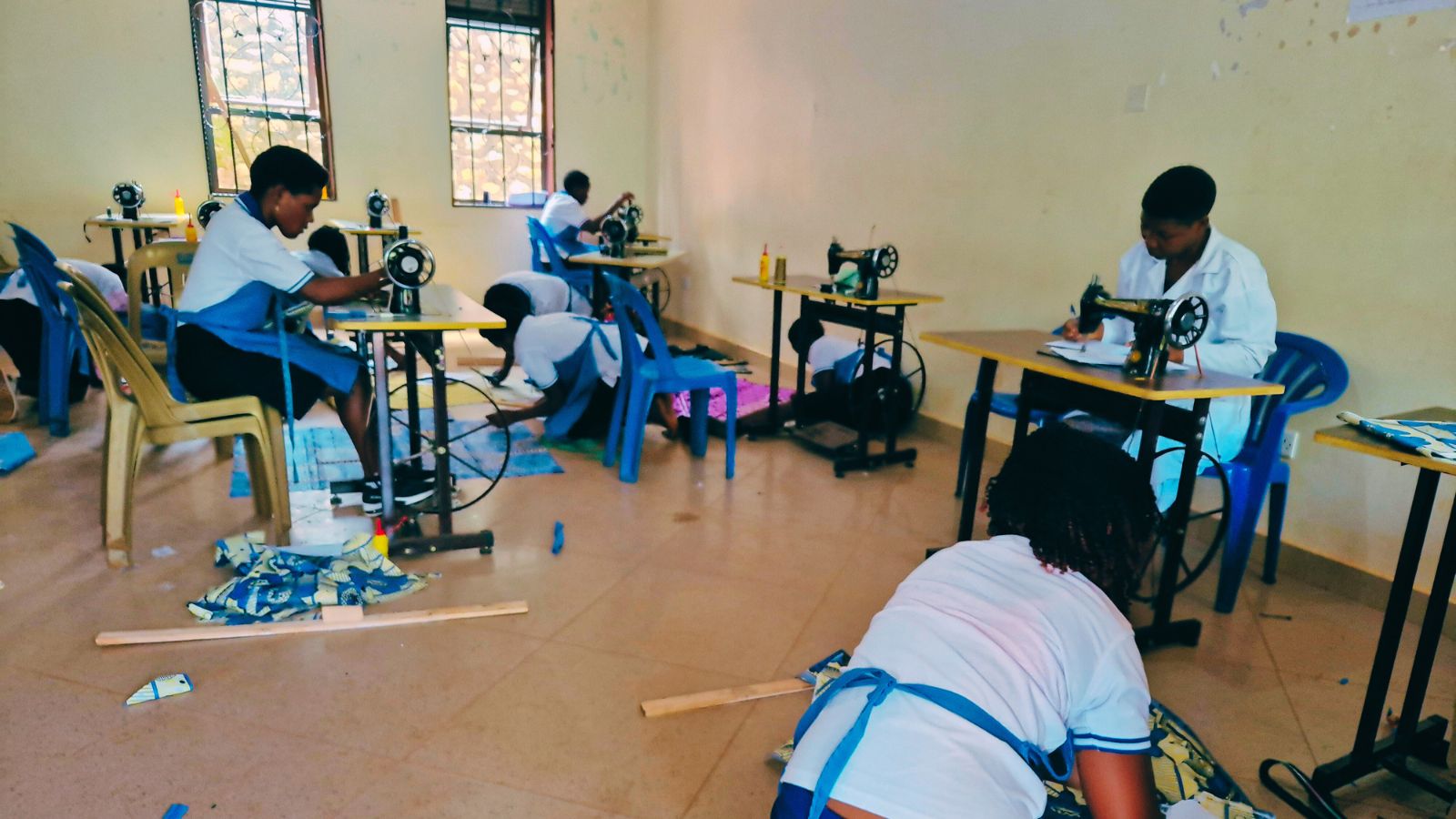
Based in Kyenjojo District in Western Uganda, Heart and Hands Foundation (HHF) runs a vocational institute that equips youth especially women with practical skills. We believe that education and vocational training are powerful tools for transformation. In recent years, we have focused on tailored programs for women, combining vocational skills training with business support services such as equipment provision and microfinance.
Tailoring and Fashion Design Training
A cornerstone of our work is tailoring and fashion design training. In a rural economy, sewing skills open doors for women to earn income from home. Our instructors teach essential techniques: cutting fabric, operating sewing machines, pattern-making, and basic garment construction. By mastering these skills, women become adept at producing quality clothing and textiles. As one description of HHF’s vocational school notes, “the first class of 50 young women started in September 2015” to study tailoring and other trades. This shows that even girls and women from remote villages can learn technical skills and succeed.
Vocational training equips women with marketable skills. Studies show that when women acquire practical trades, they can secure employment or start their own businesses. For example, Microfinancing Partners Africa reports that in Uganda, hundreds of women trained in tailoring now run successful businesses providing school uniforms and other clothing for their communities. These ventures boost household income, enabling families to afford school fees, healthcare, and basic needs.
Providing Sewing Machines and Microloans
Training alone is powerful, but we know women also need resources to launch businesses. At HHF, every tailoring graduate receives a sewing machine and starter materials, along with access to microloans. Microloans are small, low-interest loans given to women to start or expand businesses. In rural Uganda, many women have no collateral or formal bank access, so these microloans are crucial. With a sewing machine and the capital to buy fabric, a woman can immediately begin earning income from her newly acquired skills.
We have witnessed life-changing examples. One grandmother in Kanungu district acquired tailoring skills and borrowed funds to buy a sewing machine. She even sold her piglets to cover the remaining cost, showing her determination. Today she is well known for her expertise in tailoring, and local schools hire her to sew their uniforms. Her story illustrates the impact of combining equipment with training and support: similar opportunities have enabled many other women to replicate her success.
- Vocational Skills Training: We offer intensive courses in tailoring and fashion design, helping women master sewing, pattern-making, and basic entrepreneurship.
- Tools & Microloans: Graduates receive sewing machines and access to microloans to purchase materials and launch their own businesses.
- Community Empowerment: As women start income-generating businesses, their families and neighbors benefit. Local communities gain jobs and access to locally-made clothing, and overall economic stability grows.
Economic and Social Empowerment
Combining skills training with capital significantly improves women’s economic status. Many participants go from having no steady income to running profitable small enterprises. The extra earnings allow mothers and grandmothers to pay school fees, buy nutritious food, and cover medical bills. In effect, women rise out of poverty. As one NGO summary notes, vocational training “will help [women] generate an income for their families, build stable careers and even open their own businesses”. This training transforms entire households toward stability.
The ripple effect on community development is clear. New tailoring shops and dressmaking businesses create jobs for apprentices, and local markets benefit from increased trade. As economic stability increases, communities become more cohesive and resilient. A Christian development organization observes that when individuals and families thrive economically, “entire communities can experience healing”. In our experience, villages with active HHF graduates exhibit stronger local economies and greater social cohesion.
Mindset Change and Gender Equality
Beyond material benefits, the mindset change among women and within communities is profound. Women who once felt limited now see themselves as tailors, designers, and business owners. They gain confidence and challenge traditional norms. For example, young trainees often say: “Boys and girls can achieve the same things; we can do the same jobs.” By learning and practicing tailoring, they demonstrate that skill and determination matter more than gender.
These shifts extend beyond the sewing shop. Empowered women become role models, inspiring others in their villages. Their success stories help break stereotypes that used to hold back progress. We hear proudly from participants that they no longer fear new challenges. These changes in outlook, rooted in empowerment education, lay the groundwork for more inclusive communities and long-term prosperity.
Our Christian Values in Action
All of HHF’s work is underpinned by our Christian faith. We believe each person is made in the image of God and deserves dignity and opportunity. This conviction drives our commitment to empower rather than create dependency. In practice, providing tailoring training and microloans is an act of compassion and justice. Christian development leaders emphasize that economic empowerment “embodies the values of justice, mercy, and love that characterize God’s Kingdom”, and this work plants seeds of hope for the future.
Our faith-inspired values guide every aspect of the program. Love and mercy motivate us to serve the most vulnerable: giving a sewing machine to a widow or mentoring a single mother in fashion design is an expression of our calling. We interpret biblical teachings about caring for widows and orphans as empowering anyone in need. In all this, we aim to reflect Christ’s compassion, bringing not only skills and income, but also hope and purpose to individuals and communities.
Conclusion
By focusing on tailoring training and small business development, we are transforming lives in rural Uganda. We provide women with the skills, tools, and support they need to build successful enterprises. The results are powerful: higher household incomes, new local jobs, and communities that are stronger and more self-reliant. Importantly, we witness a shift in mindset: a culture once resigned to poverty is becoming one of resourcefulness, dignity, and hope. Underlying it all are our Christian convictions and unwavering commitment to these women and their communities.